
AI can make the administrative part of meeting follow-through much lighter. It can prepare a summary and propose actions. It cannot reliably know what was agreed, who accepted ownership or what should be shared beyond the meeting without a person checking.
Before the meeting
Make the recording and note-taking arrangement clear
Participants should know whether the meeting is being recorded or transcribed, what tool is being used and where the material will be stored. Agree the purpose: perhaps a draft summary and action list for the people in the room, rather than a permanent record of every spoken sentence.
Choose a meeting owner who will check the output. That person does not need to write every note, but they should be able to confirm what counts as a decision, an action and an open question. This prevents a plausible-sounding summary from becoming the unofficial record by default.
Prepare the draft
Ask AI to separate decisions, actions and unanswered questions
A useful prompt asks for a short structured draft: key decisions, proposed actions, suggested owners where explicitly stated, due dates where agreed and questions that need clarification. It should be told to mark uncertainty rather than invent missing details.
Keep the source material limited to what is appropriate for the tool and meeting. For a sensitive conversation, a short human-written note may be the better source. The value is in removing routine formatting work, not forcing every conversation through the same technology.
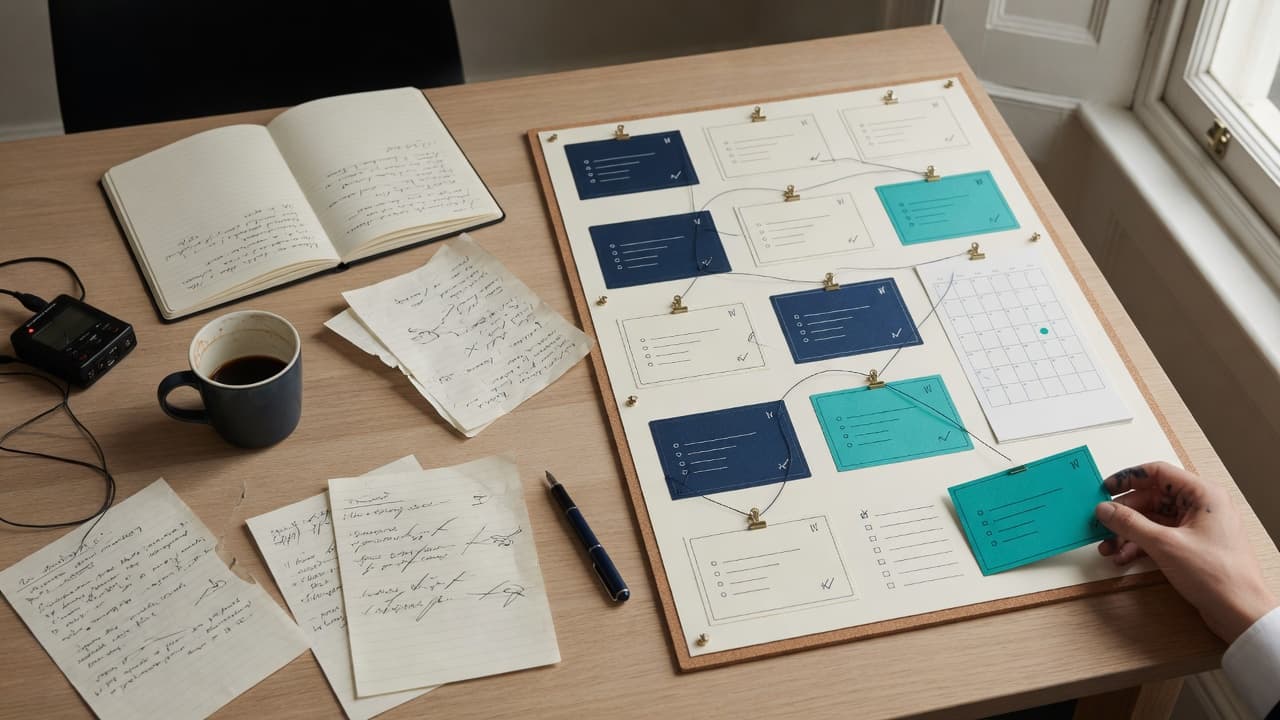
- Decision What did the group agree, and what evidence supports that interpretation?
- Action What needs doing next, by whom and by when?
- Question What was raised but needs a separate answer or owner?
- Follow-up Where will the approved actions live, and when will they be reviewed?
Make it routine
Use the same simple pattern for the meetings that matter
A consistent format makes follow-up easier to scan. It also reveals whether meetings produce too many vague actions, actions with no owner or decisions that are never written down. Those are management signals, not just note-taking problems.
Start with one recurring internal meeting. Compare the quality and timeliness of follow-up over a few weeks, then decide whether to extend the workflow. If staff still have to reconstruct what happened from the recording, the process needs a better review step rather than another AI feature.